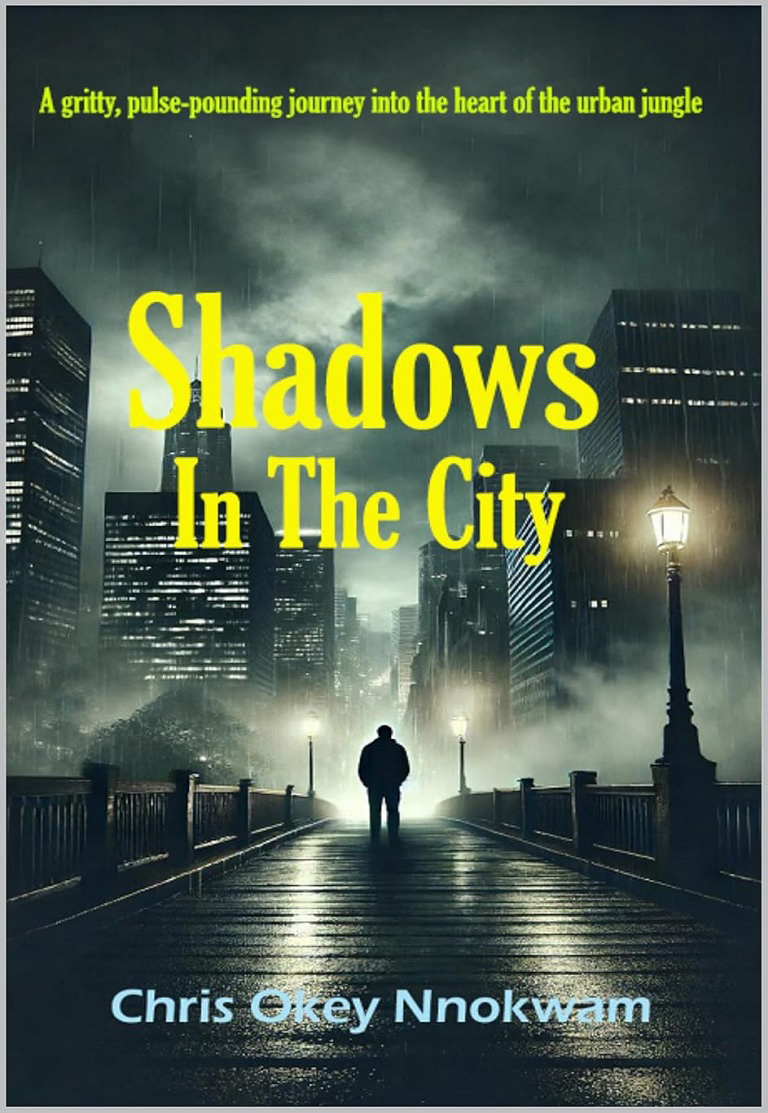
The Pulse of the Pavement: Why “Shadows in the City” is the Noir You’ve Been Waiting For
Most thrillers take you into the oval offices and the high-tech command centers. They show you the “big picture” of power. But in my novel, Shadows in the City, I wanted to take a different path. I wanted to take you into the alleyways, the transit tunnels, and the places where the city’s pulse skips a beat.
If you’ve enjoyed the “Fiction With Integrity” journey so far, this book is where the philosophy meets the street. Here are the three core conflicts that make Shadows in the City an essential addition to your bookshelf.
1. The Disappearance of the Individual (System vs. Soul)
In a “Smart City” fueled by big data and constant surveillance, how does a human being simply — vanish? The primary conflict in this book is the terrifying ease with which the system can erase an “inconvenient” person.
When a young whistleblower disappears, the city’s official response is a cold, bureaucratic shrug. The conflict isn’t just about finding a missing person; it’s about a lone protagonist, Russell Browning, fighting to show that a single life is worth more than the system’s “smooth operation.” It’s a battle for the soul of the metropolis.
2. The Labyrinth of Secrets (Architecture vs. Truth)
As an author, I’ve always been fascinated by the way cities are designed to hide things. In Shadows in the City, the urban landscape itself is the antagonist. From forgotten subway arteries to “redevelopment” zones that serve as corporate black holes, the city is a labyrinth designed to swallow the truth.
Russell Browning doesn’t just navigate streets; he navigates a maze of architectural and digital lies. Watching him peel back the layers of the “Great Metropolis” to find the rot beneath is a masterclass in tension that will keep you guessing until the final page.
3. The Weight of the Badge (Cynicism vs. Integrity)
This is the most personal conflict in the book. Russell Browning is a man that has lost everything—his career, his status, and his faith in the “plan.” He is surrounded by a world that tells him to mind his own business and let the shadows stay dark.
The internal war between his growing cynicism and his unbreakable moral code is the heartbeat of the story. Readers will find themselves asking: If the world refuses to care, why should I? The answer Russell finds is the very definition of “Fiction With Integrity.”

Why You Should Step Into the Shadows Today
I wrote Shadows in the City for the readers that love the grit of a classic noir but crave the moral depth of a modern thriller. This isn’t just a “whodunit”—it’s a “why-does-it-matter.”
It is a story for the watchers, the finders, and anyone that believes no person ever should be truly invisible.
“The city doesn’t bury its secrets; it just waits for the rain to wash them into the shadows. I’m the one that stay out in the rain.”

Are you ready to see what lies beneath the neon glow?
Don’t let the “Invisible Citizens” stay lost. Join Russell Browning on the streets and discover a thriller that is as atmospheric as it is urgent.
Watch the Streets. Find the Truth. Be a Moral Observer.

Leave a Reply