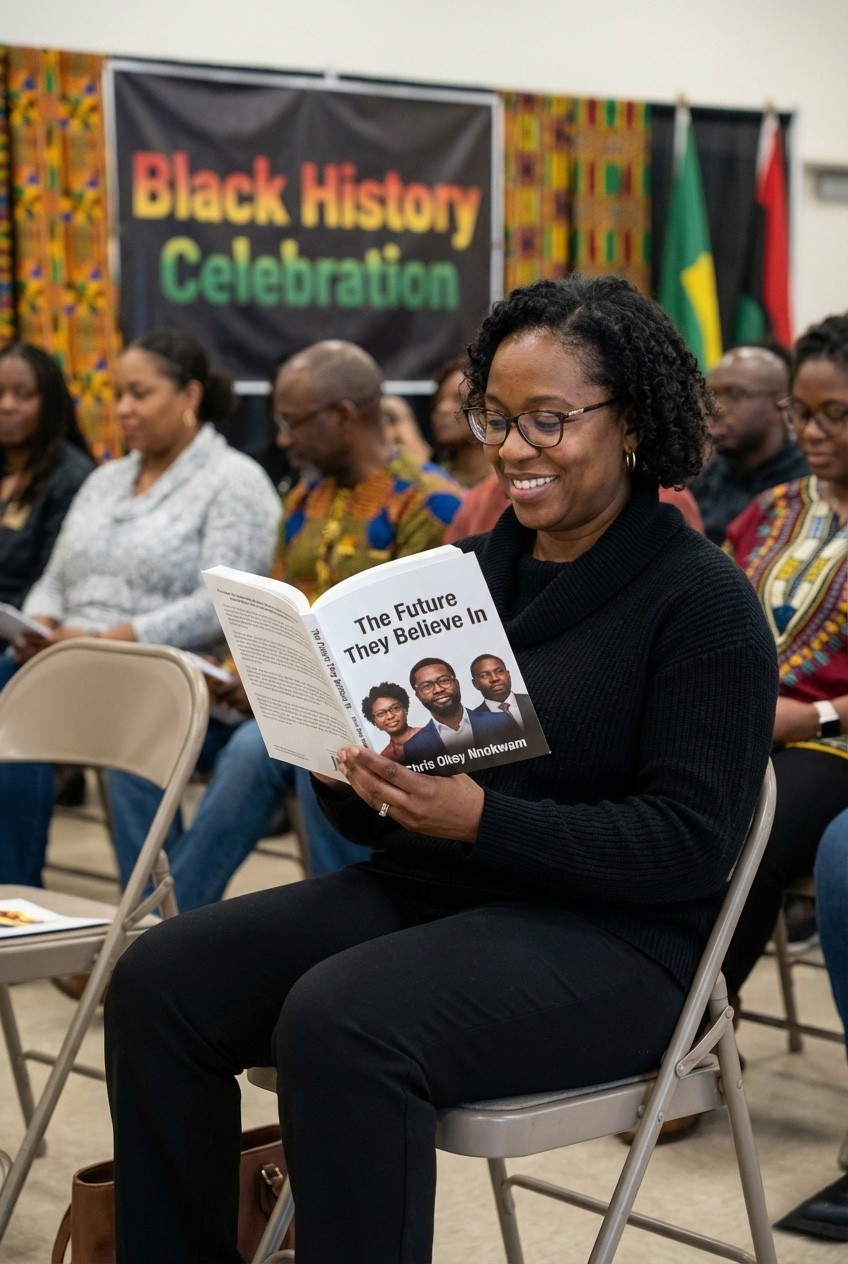
Beyond Tyranny: Why “The Future They Believe In” Resonates During Black History Month.

Every February, Black History Month calls us to honor the pioneers, leaders, and everyday people that have shaped history through extraordinary courage and unwavering resilience. It is a month not just for reflection, but for recognizing the ongoing battle to define a future free from systemic oppression.
We often remember the singular voice at the podium, but we rarely discuss the hands that built the stage.
As a Moral Observer, I am drawn to the stories of the Quiet Disruptors. I’m speaking of giants like Ella Baker, who famously said, “Strong people don’t need strong leaders.” She believed in the power of the collective over the celebrity of the individual. I’m thinking of Bayard Rustin, the master strategist that organized the March on Washington—a man that worked in the shadows because society wasn’t yet ready for his full truth. Yet he never let that dim his brilliance and the future he believed in.
The Strategy of the Unseen
In my financial and law enforcement experiences, I’ve seen this pattern play out a thousand times. The “deal” isn’t made at the press conference; it’s made in the weeks of quiet negotiation, the late-night audits, and the relentless attention to detail.
The Quiet Disruptors understood a fundamental truth: Integrity doesn’t need an audience.
Integrity is the courage to do the work when no one is watching.
Integrity is the humility to lead from behind to the future we believe in.
Integrity is the strategic patience to build systems that outlast our own names.
Building “Fiction with Integrity”
In my novels, I love exploring the “secondary” characters—the ones that hold the secrets, pull the levers, and ensure the hero actually makes it to the final chapter. These characters represent the moral glue of a story.
When I write “Fiction with Integrity,” I aim to honor the quiet ones. In a world that screams for attention, there is a profound, disruptive power in simply being consistent. Progress is a slow build, and it is the quiet disruptors that ensure the movement does not stray from the future they believe in. It is in this context that “The Future They Believe In” novel shines as a contemporary epic, echoing historical struggles and triumphs. By centering the fight against tyranny and the monumental task of reconstruction, the novel offers a powerful, fictional mirror to the real-world fight for equity, integrity, and self-determination.


The Monumental Task of Reconstruction
The Future They Believe In novel is set in a land scarred by conflict, where society has been brutalized by unchecked power and chaos. The first great conflict the characters face is not just defeating the enemy, but learning how to live, rebuild, and govern after the defeat of tyranny.
This struggle for societal reconstruction is deeply resonant with the historical Black experience. From the Reconstruction Era following the Civil War to the decades after the Civil Rights movement, the community always has faced the dual challenge of liberation and fundamental societal building.
The novel’s antagonist, Timothy Rundell, personifies the systems and forces—past and present—that seek to undermine progress, using fear and manipulation to keep a newly liberated society shackled. His resistance to Austin Blanchard’s efforts is a fictionalized reflection of the historical backlash against voting rights, economic empowerment, and racial justice. The fight for justice in the novel, therefore, is a fight for the very integrity of the community’s right to define itself.
Integrity as the Final Weapon
At the heart of the story is Austin Blanchard, a leader defined by his unwavering integrity and commitment to justice. He does not seek revenge; he seeks to establish a true, compassionate rule.
During Black History Month, we celebrate leaders—from Dr. Martin Luther King Jr. to Fannie Lou Hamer—whose power lay not in military force, but in moral clarity and unshakeable truth. Austin Blanchard’s journey captures this essential narrative: the most lasting power against oppression is a disciplined, moral refusal to compromise one’s values, even when faced with overwhelming odds.
In the novel, Austin’s integrity is his final weapon against Rundell’s manipulative ambition. This moral blueprint for leadership—insisting on justice and compassion even when easier, darker paths are available—is a critical theme, reflecting the immense moral weight carried by those that lead movements for liberation.
Defining the Future They Believe In
The title itself speaks volumes. It’s not simply “the future,” but “The Future They Believe In.”
This aspirational quality is the bedrock of the Black American experience. It is the belief that a world free from systemic barriers and injustice is not just possible, but mandatory. It is the enduring vision that sustains the fight through generations.
The Future They Believe In novel provides a thrilling epic where characters put everything on the line—their safety, their relationships, and their very lives—for the chance to govern themselves under a banner of equity. It is a powerful reminder resilience is an active choice, and the strength of human spirit always will outlast the lifespan of tyranny.
As we commemorate Black History Month, immerse yourself in a story that celebrates the power of integrity, the necessity of community, and the persistent hope needed to build the future we all deserve.
Discover the fight for justice: Get your copy of “The Future They Believe In” here 🔥 today. Chris is a visionary voice whose work explores themes of leadership, moral complexity, and the resilience of the human spirit in high-stakes settings.
Book Reviewers: if you will like to bless us with your kindness (Amazon, Barnes & Noble, or Goodreads reviews), please contact us today at chrisokeynnokwam.com and we will gratefully arrange for review copies of your choice. We appreciate your generosity.
About the Author

Chris is a fiction writer and the creator of the Moral Observer brand. Known for his ability to weave complex ethical dilemmas into gripping narratives, Chris explores the intersection of power, justice, and the human condition across multiple genres. From the high-stakes tension of crime thrillers like ‘Shadow of Justice‘ and ‘Brookhaven Rising‘ to the expansive world-building of ‘The Mystical Land of Zenia‘ and ‘The Verdant Realm of Gissett,’ his work challenges readers to look beyond the surface. As “The Moral Observer,” he provides a unique lens on the “Moral Calculus” that defines our choices, both in fiction and in reality.

Leave a Reply